Texas Sales Tax for Contractors: What Houston Construction Companies Need to Know
Figuring out texas sales tax for a construction job can be a headache. One project may use lump-sum billing, while another uses separated billing. Then, you may wonder which charges are taxable.
You’re not alone. Contractors across the state face these rules every day.
Houston makes these rules even trickier. The city has a booming mix of commercial towers, custom homes, and many projects in between. Layers of subcontractors help explain why the Comptroller’s office watches local builders closely. A mistake with materials or exemptions can cause an audit and cost time and money.
Jones CPA Group is a Houston-based accounting and bookkeeping firm for construction businesses. We speak your language, whether you pour foundations or manage a dozen job sites at once.
This guide explains the basics in plain English. You’ll learn how contract types affect your duties, which materials are taxed, and how to stay compliant without losing sleep.
Key Takeaways
- Contract type (lump-sum vs. separated) changes how you handle tax on materials and labor.
- Houston’s large mix of commercial and residential projects increases audit exposure for local contractors.
- Certain materials and services qualify for exemptions, but the rules are easy to misapply.
- Subcontractor relationships add extra layers of complexity to compliance.
- Jones CPA Group specializes in construction accounting and understands these challenges firsthand.
- Staying compliant protects your business from costly penalties and audit headaches.
1. Understanding Texas Sales Tax for Contractors
At Jones CPA Group, we’ve answered many questions from Houston contractors about taxable job-site purchases. Sales tax affects nearly every part of construction, from ordered lumber to rented equipment. Learning these basics makes permits, exemptions, and audits easier to manage.
Here is what every Houston contractor should know before bidding on the next project.
1.1 Current Texas Sales Tax Rate and How It Applies to Construction
The texas sales tax rate starts with a state base of 6.25%. Local areas can add up to 2%, creating a maximum combined rate of 8.25%. The exact rate depends on the job site’s location within the Houston metro area.
A downtown Houston project may have a different combined rate than one outside city limits. Jones CPA Group helps clients find the correct texas sales tax rate for each job location. This protects margins and keeps invoices and quarterly filings ready for audits.
1.2 Taxable Items in Texas Construction Projects
Texas casts a wide net around taxable items in texas construction work. Contractors pay tax on more than raw materials, including supplies, tools, and some services.
| Taxable Category | Common Example | Tax Treatment |
|---|---|---|
| Materials incorporated into real estate | Lumber, concrete, roofing shingles | Taxable at time of purchase |
| Job-site consumable supplies | Nails, tape, safety gear | Taxable, even if not part of the final structure |
| Equipment used to provide services | Power tools, compressors | Taxable whether purchased or rented |
| Leased equipment (with or without operator) | Renting a generator or crane | Taxable rental charge |
| Real property services | Land surveying, landscaping | Taxable service charge |
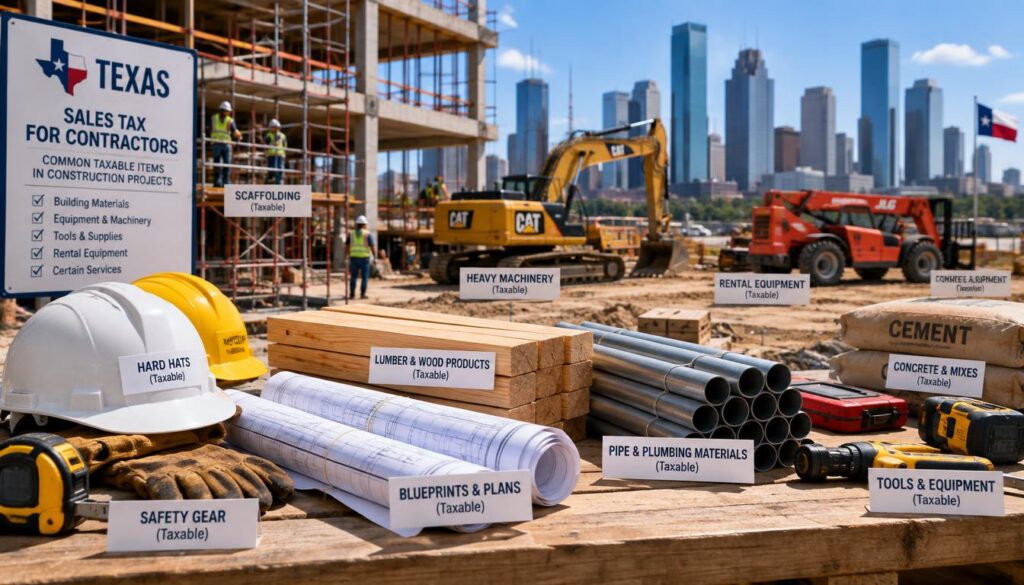
Consider a routine job: ordering roofing shingles, renting a generator for a week, or hiring a survey crew. Each example creates a taxable transaction. Jones CPA Group helps Houston contractors separate taxable purchases from exempt ones.
1.3 Texas Sales and Use Tax: What’s the Difference for Contractors
Contractors often confuse texas sales and use tax, but the two taxes work differently. The tax depends on where you buy an item, not only where you use it.
If you buy equipment from a Texas vendor, you pay sales tax at checkout. If you buy it from an out-of-state seller and bring it into Texas, use tax applies.
A San Antonio contractor buying a backhoe from a Houston dealer pays sales tax. Buying the same backhoe from a seller in Tulsa, Oklahoma, triggers use tax after it enters Texas.
Unpaid use tax is a common finding during a Texas sales and use tax audit. Jones CPA Group helps clients track these purchases, preventing costly problems later.
2. Staying Compliant: Sales Tax Rules Every Houston Contractor Should Follow
Houston contractors must follow four Texas sales tax rules: permits, collection, resale certificates, and exemptions. Following them protects your business from audits, penalties, and tax-season surprises.
If you make a mistake, the Texas Comptroller may send an unexpected bill. These steps explain what to do and when.
2.1 How to Get a Texas Sales Tax Permit
Before collecting sales tax in Texas or claiming exemptions, get a Texas sales tax permit from the Comptroller’s office. Registration is free and takes about 15 minutes online through the Comptroller’s website.
Every contractor using separated contracts must hold this permit. Without it, you cannot issue resale certificates or use the sale-for-resale exemption.
Jones CPA Group helps Houston contractors register correctly the first time. We match each application to your business structure and contract types, avoiding delays with the state.
2.2 How to Collect Sales Tax in Texas as a Contractor
How you collect sales tax in Texas depends on your contract type. Lump-sum contractors pay tax on materials, supplies, equipment, and taxable services when they buy them. They do not add sales tax to the customer’s invoice.
Separated contractors issue a resale certificate to buy materials tax-free. Then they collect state and local sales tax from customers on separately listed material and service charges. The material charge must equal or exceed the contractor’s original cost.

| Feature | Lump-Sum Contract | Separated Contract |
|---|---|---|
| Tax on Materials at Purchase | Contractor pays tax when buying materials | Contractor buys tax-free using resale certificate |
| Tax Charged to Customer | No tax added to invoice | Tax collected on stated material/service charges |
| Resale Certificate Use | Not applicable | Required for tax-free purchasing |
| Sales Tax Filing Requirement | No customer-collected tax to report | Must report collected tax to Comptroller |
Mixing these approaches is one of the most common mistakes we see. It can also trigger a costly audit quickly.
2.3 Using a Texas Resale Certificate the Right Way
A Texas resale certificate lets separated contractors buy materials, supplies, and some services without paying sales tax upfront. It covers building materials, job-site waste removal, janitorial services, landscaping, surveying, and security systems installed during property improvements.
The certificate works only when completed and given to the correct party. Never use it for tools, equipment, or items your business consumes instead of reselling.
Misusing a resale certificate, even by accident, can cause back taxes, interest, and penalties during a Comptroller audit. Jones CPA Group helps contractors keep clear records, matching each certificate with the purchase and contract type.
2.4 Texas Sales Tax Exemptions Contractors Should Know
Texas sales tax exemptions can lower your tax burden. Knowing which exemptions apply to your projects can save your business real money over time.
- Purchases made for governmental entities and qualifying nonprofit organizations
- Exempt contracts for improvements to real property performed for or benefiting tax-exempt organizations
- Labor to repair nonresidential property damaged in a natural disaster declared by the President or Governor
- Scheduled, periodic maintenance labor performed on real property
- The sale-for-resale exemption, which remains the most commonly used exemption for separated contracts
The sale-for-resale exemption prevents materials from being taxed twice, at purchase and sale. It works only when your records are complete and your Texas sales tax permit is current.
Sales tax filing Texas contractors manage can become complex when contracts, exemptions, and certificates overlap. Texas Comptroller sales tax rules require accurate reports, and Jones CPA Group helps find missed exemption opportunities.
3. Conclusion
Houston contractors face sales tax rules with small details and serious consequences. Lump-sum and separated contracts, permits, resale certificates, and exemptions have different requirements. Missing one step can cause penalties or reduce project profits.
Construction companies do not have to manage these rules alone. Jones CPA Group works with accountants and bookkeepers who understand construction accounting inside and out. Based in Houston, Texas, the team understands local contractors and the Texas Comptroller’s expectations for sales tax collection and reporting.
Skilled bookkeepers can organize your records throughout the year, so tax season does not catch you off guard. Experienced accountants can review your contracts and confirm you collect the right tax amount. They can check that your exemption certificates hold up if audited, saving time and protecting your bottom line.
Running a construction business means managing crews, materials, deadlines, and clients. Tax compliance should not add another burden. Reach out to Jones CPA Group today. Let their team handle the numbers while you focus on building great projects across Houston.
FAQ
What is the current Texas sales tax rate for contractors working in Houston?
Texas sales tax combines the state’s 6.25% base rate with local rates up to 2%. That makes the total as high as 8.25%, depending on the job site’s location within Houston’s metro area. Because rates vary by city, county, and special taxing district, check the exact texas sales tax rate before bidding or invoicing.
Do I need a Texas sales tax permit if I run a construction business in Houston?
A texas sales tax permit from the Texas Comptroller is required for separated contracts using tax-free materials through a resale certificate. It lets you collect Texas sales tax and follow state sales and use tax rules. Jones CPA Group can guide Houston contractors through the application.
What’s the difference between a lump-sum contract and a separated contract for sales tax purposes?
A lump-sum contract combines labor and materials in one price; contractors pay tax on materials upfront, without separate customer billing. A separated contract lists labor and materials separately, so contractors collect Texas sales tax on materials. This choice affects taxable items in Texas construction projects and overall tax exposure.
Which items are considered taxable in Texas construction projects?
Taxable items typically include lumber, roofing supplies, fixtures, job-site tools, and leased equipment, such as generators or scaffolding. They also include certain real property services; even weekend generator rentals may create tax obligations, so track purchases carefully.
What’s the real difference between Texas sales tax and use tax for contractors?
Texas sales and use tax ensure the state taxes goods, regardless of where you buy them. Sales tax applies to in-state purchases, while use tax applies when an out-of-state supplier does not charge Texas tax. Contractors must report and pay that use tax themselves, and missing this distinction can trigger Houston audits.
How do I use a Texas resale certificate correctly?
A texas resale certificate lets contractors buy certain materials, landscaping, surveying, security systems, or waste removal services tax-free. These items must be resold or incorporated into a separated contract job. Using it for a lump-sum contract or personal purchases can trigger Texas Comptroller assessments, so accountants or bookkeepers should review it.
Are there sales tax exemptions available for Houston contractors?
Absolutely. Exemptions may apply to work for governmental agencies or nonprofit organizations. They may also cover natural disaster repair labor and certain scheduled maintenance contracts. Knowing which projects qualify can reduce your tax burden, and Jones CPA Group helps Houston contractors document exemptions properly.
How often do contractors need to handle sales tax filing in Texas?
Texas sales tax filing is usually monthly, quarterly, or annually, based on how much tax you collect. The Texas Comptroller assigns your frequency when you register for your permit. Meet deadlines to avoid penalties; dedicated accountants and bookkeepers help many Houston contractors file accurately and on time.
Why do Houston construction companies face higher audit risk from the Texas Comptroller?
Houston has large commercial and residential projects, many subcontractors, and varied contract types. These factors create more sales tax mistakes and attract the Texas Comptroller’s attention. Experienced accountants and bookkeepers who understand construction tax rules can significantly lower audit risk.
Can Jones CPA Group help with Texas sales tax compliance for my Houston construction company?
Yes! Jones CPA Group specializes in accounting and bookkeeping for Houston contractors. They handle texas sales tax permit applications, resale certificate management, exemption documentation, and ongoing sales tax filing in Texas. Their team makes sure nothing slips through the cracks, so you can focus on building instead of untangling tax paperwork.